
Afro-textured hair is thick, tightly coiled, and naturally dense, but it also presents unique challenges during hair restoration. The follicles are usually curved beneath the skin, which means extraction requires more precision than a standard transplant. Afro Hair Transplant in Islamabad is designed for patients who want permanent hair restoration without losing their natural curl pattern, density, or authentic hairline character.
At Skin Esthetics Clinic Islamabad, Afro hair transplant planning is based on curl structure, donor strength, scalp condition, and the pattern of hair loss. The goal is not just to move grafts. The goal is to restore natural-looking textured hair in a way that blends properly with existing curls and respects the way Afro hair grows.
Understanding Afro-Textured Hair
Afro hair behaves differently from straight or loosely wavy hair. Above the skin, it forms tight curls or coils. Beneath the skin, the follicles are often curved or spiral-shaped. That curved structure makes extraction more delicate and increases the risk of graft damage when the surgeon does not understand textured hair properly.
Key characteristics include:
- Tightly coiled strands that create strong visible density
- Curved follicles that need adjusted extraction angles
- Natural growth direction that must be matched carefully during implantation
- Dense donor zones that need controlled harvesting to avoid over-thinning
That is why an Afro hair transplant should never be handled like a routine transplant case.
Why Afro Hair Transplant Requires Special Expertise
Afro-textured follicles are more prone to transection during extraction because the hair root curves below the surface. If the extraction angle is wrong, the graft is damaged before it even reaches implantation. The challenge is not just removing the graft. It is preserving the curl structure, protecting graft survival, and placing the follicles at the correct angle so the final growth looks natural.
Patients who are still in the early stages of thinning may also need alopecia treatment first if the hair loss pattern suggests an active medical cause rather than a stable transplant case.
Who Is an Ideal Candidate for Afro Hair Transplant?
You may be a suitable candidate if you:
- have Afro-textured or tightly coiled hair
- have stable pattern baldness
- have temple recession, thinning crown, or hairline loss
- have traction-related edge loss in a stable case
- have a healthy donor area and realistic expectations
- want long-term restoration rather than temporary cosmetic cover
Who May Need a Different Plan First?
Not every Afro-textured hair loss case should go straight to transplant. Some patients need medical control, scalp treatment, or a stability period before surgery is considered.
Treatment may need to be delayed or redirected if you have:
- active scarring scalp disease
- unstable traction alopecia that is still progressing
- inflamed scalp conditions such as folliculitis that have not been controlled
- diffuse thinning with weak donor reserves
- unrealistic expectations about instant density or unlimited graft use
If the main issue is ongoing shedding rather than stable baldness, hair loss treatment may be more appropriate before any transplant decision is made.
Common Reasons for Hair Loss in Afro Hair
Hair loss in Afro-textured hair can happen for several reasons, including:
- male or female pattern baldness
- traction alopecia from tight braids, locs, weaves, or repeated styling tension
- hormonal hair loss
- folliculitis or chronic scalp inflammation
- chemical damage and over-processing
- previous scarring in the hairline or temple region
Women with edge loss from repeated tension often need careful assessment to decide whether transplant is the right next step or whether the area needs recovery first.
Afro Hair Transplant Procedure
Consultation and Hairline Design
The scalp, donor area, hair caliber, curl intensity, and pattern of loss are examined first. A hairline is then designed to match facial proportions and natural Afro density rather than creating a line that looks artificial or overly straight.
Donor Area Assessment
The surgeon assesses donor density and the quality of the grafts available at the back and sides of the scalp. In Afro-textured hair, donor planning matters because the curls can provide excellent coverage, but careless overharvesting can still thin the donor region visibly.
Specialized FUE Extraction
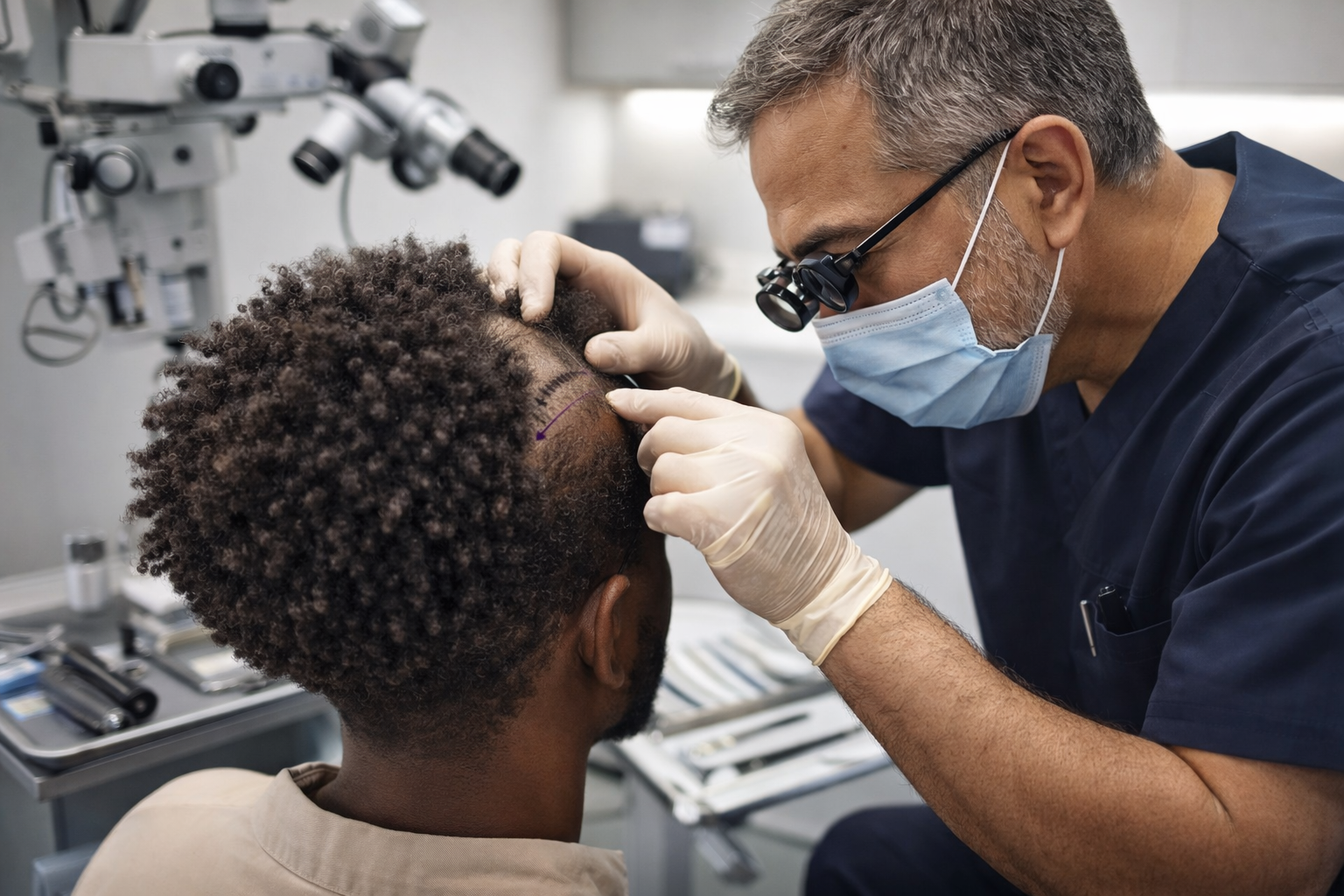
Follicles are extracted using modified techniques, specialized punches, magnification, and controlled angles to reduce transection and protect the curved root structure. This is one of the most important stages of the procedure.
Graft Preparation
Each graft is checked carefully to confirm that the follicle is intact and viable. Damaged grafts are excluded. The aim is not just a high graft count. It is strong graft survival.
Recipient-Site Creation and Implantation
Tiny recipient sites are created to match the natural direction and character of Afro-textured growth. The grafts are then placed strategically to preserve curl pattern, density distribution, and a natural transition into the surrounding hair.
Aftercare and Recovery
Patients receive detailed aftercare instructions for washing, sleeping position, medication use, and follow-up. Good graft handling can still be undermined by poor early care, so the recovery stage matters.
Afro Hair Transplant for Traction Alopecia
Afro hair transplant is often considered in patients with traction alopecia, especially women who have lost density around the edges, temples, or frontal hairline after years of tension from styling. This can be a strong indication for transplant, but only when the traction has stopped and the hair loss pattern is stable.
If the concern is broader restoration of the frontal frame or female-pattern thinning, female hair loss restoration may also be part of the wider discussion depending on the diagnosis.
Benefits of Afro Hair Transplant
- restores natural curl pattern with your own hair
- creates fuller-looking coverage because Afro hair carries strong visual density
- improves hairline, temples, crown, or edges with long-term growth
- allows the transplanted hair to be washed, trimmed, and styled normally
- can offer a lasting solution when donor hair is healthy and the condition is stable
Recovery Timeline
First Week
Mild swelling, redness, or small scabs can appear. Most patients return to routine activity within a few days.
Weeks 2 to 6
Transplanted hairs often shed during the normal early phase. The scalp continues healing beneath the surface.
Months 3 to 6
New hair starts growing. Early curl and density changes become more visible.
Months 9 to 12
Fuller results develop gradually. The transplanted hair blends more naturally with the existing Afro texture.
Will the Curl Pattern Stay the Same?
Yes. The transplanted hair keeps the characteristics of the donor hair. That means the curl pattern, thickness, and texture remain consistent with the source area when the grafts are handled and implanted properly.
Afro Hair Transplant Cost in Islamabad
Afro hair transplant cost in Islamabad depends on graft count, hairline complexity, donor quality, and the technical difficulty of curved follicle handling. Afro cases can cost more than standard cases because extraction and implantation require more time, more care, and more precision.
The final cost usually depends on:
- number of grafts required
- donor area quality
- hairline or edge design complexity
- whether the case involves traction alopecia, crown loss, or broader restoration
- the level of surgical difficulty in extraction and placement
Why Choose Skin Esthetics Clinic Islamabad?
Patients choose a specialized clinic because Afro-textured hair cannot be treated like straight-hair transplant cases. The work requires an understanding of curved follicles, curl preservation, donor management, and realistic density planning.
Skin Esthetics Clinic Islamabad focuses on:
- understanding Afro-textured follicle structure
- modified FUE planning for curved grafts
- natural hairline design and curl preservation
- careful donor management to reduce unnecessary loss
- long-term restoration planning rather than generic transplant packaging
Patients who want a broader surgical overview may also compare this with the clinic’s hair transplant page, but Afro cases should still be assessed on their own technical terms.
Frequently Asked Questions
Is Afro hair transplant more difficult than a standard transplant?
Yes. The curved follicle structure makes extraction and implantation more technically demanding, which is why surgeon experience matters more in these cases.
Are the results permanent?
Yes. Once the transplanted follicles take root successfully, they continue to grow long term like donor hair normally does.
Will the transplanted hair keep the same curl pattern?
Yes. The transplanted hair keeps the texture and curl characteristics of the donor hair.
Can women with traction alopecia get an Afro hair transplant?
Yes, in suitable stable cases. The area needs proper assessment first, especially if traction damage is still active or inflammation is present.
How long does recovery take?
Initial healing usually takes around 7 to 10 days, while fuller visible growth develops gradually over several months.
How long before I see full results?
Most patients see their fuller final result between 9 and 12 months, although early growth usually begins sooner.
Can the transplanted hair be styled normally?
Yes. Once the hair has grown in, it can be washed, shaped, cut, and maintained like your natural Afro-textured hair.
Conclusion
Afro Hair Transplant in Islamabad requires more than standard transplant skill. It requires proper handling of curved follicles, careful donor management, accurate curl-pattern placement, and a realistic plan based on the cause of hair loss. When done properly, it can restore natural density, improve the hairline, and preserve the authentic look of Afro-textured hair.
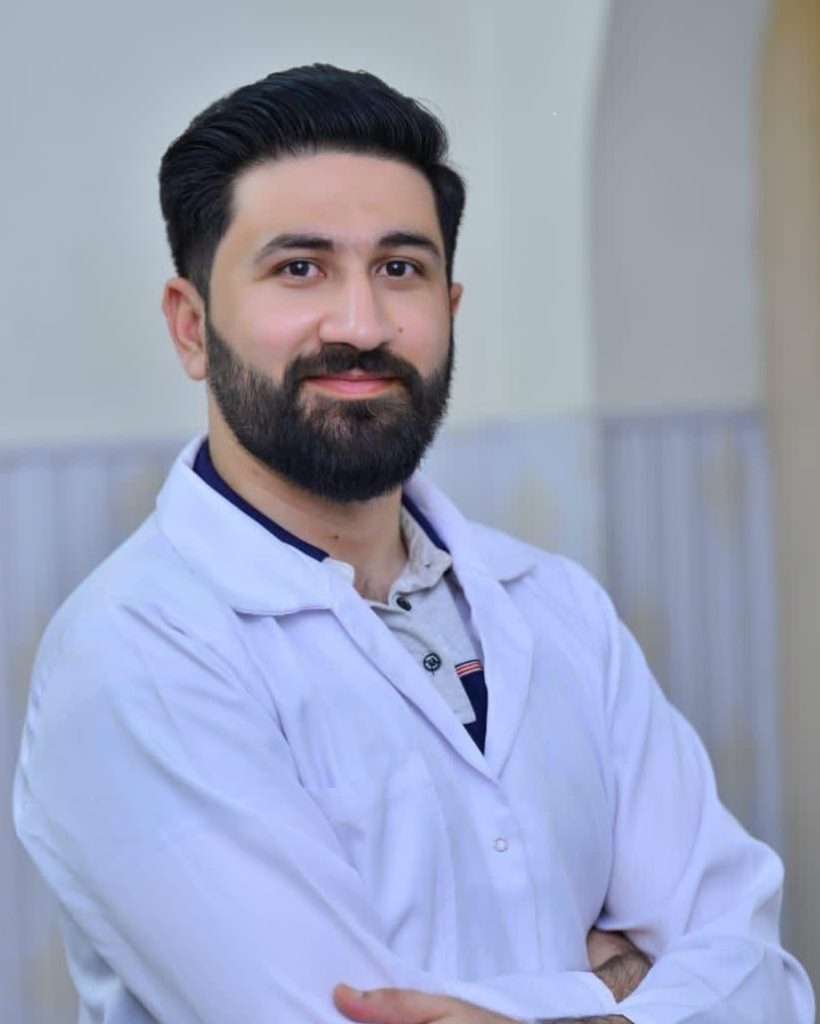
Dr. Abbas Shah
Be prepared for a new look and new you by getting
Dr. Abbas Shah, a renowned dermatologist and the proud owner of Skin Esthetics, brings years of expertise in skincare and aesthetics. Known for his dedication to providing top-notch care, Dr. Abbas offers a range of advanced treatments, including Micro hair transplant services, designed to deliver exceptional, natural-looking results. With a commitment to excellence and personalized care, Dr. Ghulam Abbas Shah ensures that every client at Skin Esthetics receives the highest quality treatment for transformative outcomes.
Discover your skin’s true potential with Dr. Abbas Shah’s expert guidance. Transformative skincare solutions tailored to your unique needs. Unlock radiant, healthy skin and embrace confidence like never before. Hair transplantation is a surgical procedure that moves hair follicles from the back and sides of the head to the balding areas. This treatment is effective for restoring hair growth and addressing various types of hair loss.